

September 23, 2026
Importing Under Bond: Duty-Free Inputs for Export Production

Most of this blog is written for importers who pay duty. This one is about the importers who do not.
If your factory produces for export, Bangladesh's bonded warehouse system lets you bring in raw materials, inputs and packaging without paying duty or taxes on them at all, and store them on your own premises under customs supervision. It is the single largest cost difference between an export manufacturer and a domestic one.
If you import to sell in the local market, this facility is not available to you, and the rest of this article is context rather than opportunity.
What bonded warehousing actually is
A bonded warehouse is not a separate building somewhere. In practice it is your own premises, licensed and supervised, where imported inputs sit in a duty-suspended state.
The duty is not waived because the government likes exporters. It is suspended because the goods are expected to leave again, embodied in a finished product that earns foreign exchange. That conditional logic runs through every rule in the system.
Who qualifies
Bangladesh Customs recognises several categories, and the one you fall into changes the paperwork.
- Special bonded warehouse: for one hundred per cent export-oriented ready-made garment industries, covering woven, knit and sweater manufacturing. This was introduced in the 1990s specifically to cut lead times in the garment sector
- General bonded warehouse: for other one hundred per cent export-oriented industries, including shipbuilding and accessories manufacturers
- Home consumption bond: a deferred payment facility rather than an exemption
- Diplomatic bonded warehouse: for duty-free sales to privileged persons, which is a different world entirely
- EPZ and economic zone bonds: for enterprises inside designated zones
There is also provision for deemed exporters, meaning manufacturers who do not export directly but supply an exporter through subcontracting and are paid through a local letter of credit. If you supply accessories or packaging to a garment exporter, this category is worth asking about, and the back-to-back letter of credit structure is usually part of the same conversation.
Entitlement is the heart of the system
You do not get to import whatever you like duty-free. You get to import what your export order plausibly consumes.
That link is made through a utilisation declaration or utilisation permission. For ready-made garment factories, the UD is issued by the manufacturers' association, BGMEA or BKMEA for their respective members. For other export-oriented industries, the UP is issued by the Customs Bond Commissionerate.
The document sets out how much input a given export order should require: so many metres of fabric, so many buttons, so much packaging per garment. Import within that entitlement and the duty stays suspended. Import beyond it and the excess attracts full duty like any other consignment.
This is why input-output ratios matter commercially as well as technically. A wastage allowance that is too tight leaves you paying duty on ordinary production loss; one that cannot be justified invites a different conversation at audit.
The obligations people underestimate
A bond licence is a compliance relationship, not a one-off permission.
- A general bond has to be executed, with values that vary by licence type and run into the tens of millions of taka
- Registers and records must be maintained, showing what came in, what was consumed and what went out
- An annual audit is mandatory, after which the Bond Commissionerate issues its report
- Bonding periods apply, ranging from months to a few years depending on the type of warehouse, so inputs cannot sit indefinitely
- Reconciliation is the real test: imports under bond have to be accounted for against exports actually made
None of that is unusual for a duty-suspension regime anywhere in the world. It does mean the facility carries an administrative cost that a small operation should budget for honestly before applying.
The line you cannot cross
Bonded goods are imported for export production. Selling them into the domestic market instead is diversion, and it is the central enforcement concern of the entire regime.
It is worth being blunt about this for two reasons. First, the consequences for a licence holder are severe, running from duty and penalties to the loss of the licence that makes the business viable. Second, the leakage of duty-free inputs into open markets is precisely why officials have historically hesitated to widen the facility, and why bond supervision capacity is discussed whenever expansion is proposed.
If you are a domestic importer, there is a mirror-image warning. Goods offered cheaply in the local market that were imported duty-free under someone's bond are not a bargain; they are somebody's compliance failure, and dealing in them carries its own risk.
Where the system is heading
Two developments are worth knowing about.
The administration is being digitised. The customs system and the association-issued electronic UD have been interconnected, and online bond permissions are now issued at scale rather than over a counter. If your last experience of bond paperwork was manual, the current position is probably different.
Extending bonded facilities beyond the garment sector to all export-oriented industries has also been proposed at national level, most prominently in 2023, with progress tied explicitly to completing bond automation. Treat that as a direction of travel rather than a current entitlement, and check what your sector can actually get today.
A note on legal references
Published guidance on bonded warehousing, including official pages, describes the facility as operating under sections 84 to 119 of the Customs Act, 1969, together with rules and orders issued by the NBR, with licensing under the Bonded Warehouse Licensing Rules, 2008.
As covered in our guide to how customs values your goods, the Customs Act 1969 was replaced by the Customs Act 2023, which took effect in June 2024. The bond regime itself continues, but if you are citing a section number in correspondence, confirm the current reference rather than quoting an older article.
If you are not an exporter
This still affects you in two practical ways.
Your competitors who export are buying inputs at a different cost base, which is worth understanding before you assume their pricing reflects better sourcing. And if you supply them, your own eligibility as a deemed exporter may be worth exploring rather than assuming duty is unavoidable.
For everything else, the ordinary rules apply: your duties and taxes are calculated in the normal way, and the concessions available to you are the ones described in our guide to capital machinery and to preferential duty under APTA.
Where to start
Talk to the Customs Bond Commissionerate for your area, and to your trade association if you are in a sector that issues its own UD. Ask what licence type fits your operation, what bond value applies, what the audit expects, and what the current processing time looks like under the online system. Then budget for the compliance, not just the saving.
Bond rules, licence conditions and eligibility change, and are applied case by case. Confirm the current position with the Customs Bond Commissionerate or your C&F agent before relying on any of this for a decision.
Ready to ship? Explore our sea freight, air freight, sourcing, and customs clearance services from China to Bangladesh.
Get a Sourcing & Shipping Quote ← All posts
Related Articles
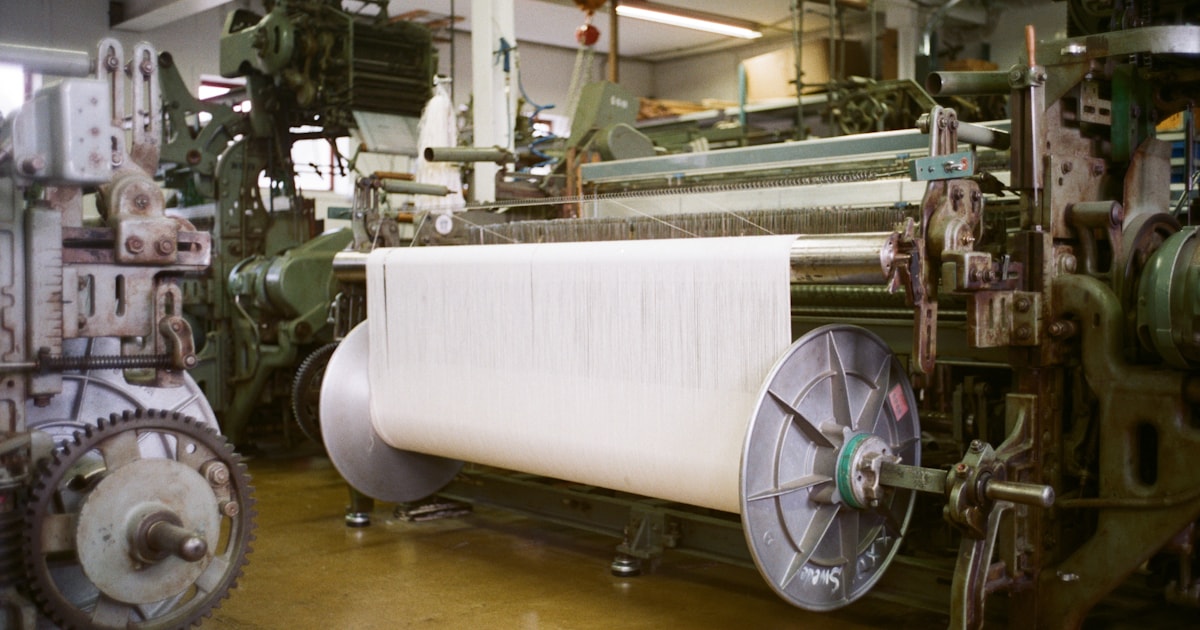
Sourcing Garment and Textile Materials from China for the RMG Sector
Read more →
How a Letter of Credit Actually Works (and Where It Goes Wrong)
Read more →
Understanding Import Duties and Taxes in Bangladesh
Read more →
Why Customs May Not Accept Your Invoice Value
Read more →
The Capital Machinery Duty Concession, and Why the Rate You Read Is Probably Stale
Read more →
The Duty Discount on Chinese Goods Most Importers Never Claim
Read more →
What a C&F Agent Actually Does (and How to Choose One)
Read more →
Duty Drawback: Getting Back the Duty You Paid on Exported Inputs
Read more →No guide matches that search yet. Ask us on WhatsApp and we will answer.

Tell us what you're shipping.
Product, quantity and delivery city are enough to start. We reply within 24 hours with a door-to-door quote.