

September 11, 2026
Chattogram or Mongla: Does Your Cargo Have to Arrive at Chattogram?
Almost every guide to importing into Bangladesh — including most of ours — quietly assumes your container arrives at Chattogram. That assumption is usually correct, but it is worth understanding why, because Bangladesh has a second seaport and importers periodically ask whether they should be using it.
The short answer is that Mongla is a real port with real advantages and one constraint that decides the question for most China imports. The longer answer is more interesting, because the constraint is being worked on.
Start with the scale difference
The gap between the two ports is not a matter of degree.
Chattogram handled around 3.26 million TEU in 2024, up roughly 7% on the previous year. Mongla, in recent reported years, has handled figures in the region of 26,000 to 32,000 TEU annually.
That is not a close comparison. Chattogram moves in a couple of days what Mongla moves in a year.
This matters to you in a specific, practical way. Container volume determines how many shipping lines call at a port, how often, and how competitively they price. A port that sees thirty thousand boxes a year does not attract a dense schedule of services from Chinese ports. If your goods are consolidated into an LCL container out of Guangzhou or Shenzhen, the service almost certainly routes to Chattogram, because that is where the vessels go.
The constraint that actually decides it
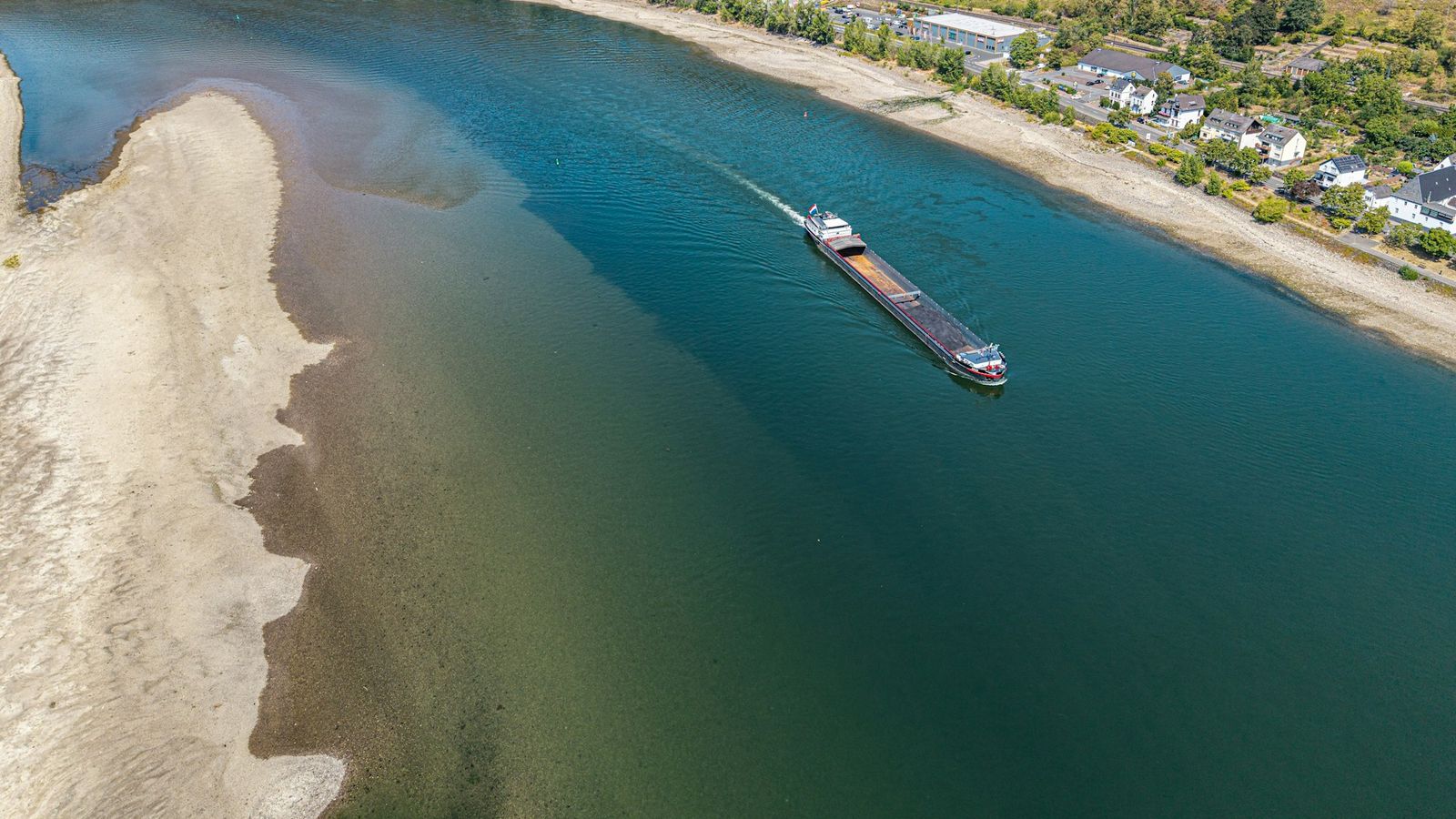
The reason Mongla has not grown into a serious container alternative is water depth.
Mongla sits inland on the Pasur River, and vessels reach it through a channel whose depth limits the size of ship that can safely transit. The port's stated maximum is around 8.5 metres of draft, subject to significant tidal variation, with vessels up to roughly 200 metres long and in the 30,000 to 40,000 DWT range. In practice, businesses have long complained that the channel realistically handles considerably less than the headline figure.
Modern container ships are larger than that. A vessel that cannot enter cannot call, and a port that cannot take the ships operating on a trade lane is not really on that trade lane.
Chattogram has its own draft limitations and its own well-documented congestion — which is exactly why demurrage and detention charges are such a persistent problem there. But it has the services.
What the Padma Bridge changed
The Padma Bridge genuinely improved Mongla's position, and it is the reason the question keeps coming up.
Road distance from Mongla to Dhaka fell from roughly 289 kilometres to about 170 kilometres. For an importer whose goods end up in Dhaka, that is a material reduction in inland trucking — and inland transport is a real cost, as our guide to last-mile delivery to Dhaka covers.
So the land-side argument for Mongla is now reasonably strong. It is the water side that has not kept up.
When Mongla actually makes sense
There are cases where it is the right answer, and they are more specific than "it is closer".
- Your business is in the southwest. If you are in Khulna, Jessore, Bagerhat or nearby, Mongla is dramatically closer than Chattogram and the inland leg changes the whole calculation
- You are importing bulk or break-bulk rather than containers. Mongla handles a meaningful share of Bangladesh's vehicle imports and various bulk cargoes, where the vessel profile suits the channel
- Your shipment is large enough to justify its own arrangement. If you are chartering or booking direct rather than riding a scheduled container service, the routing is yours to choose
- Chattogram congestion is biting and your forwarder can actually offer a Mongla service for your lane — which is the part to verify rather than assume
For a typical China-to-Bangladesh container import, none of these usually apply, which is why the default holds.
What is changing
This is worth watching rather than dismissing.
Capital dredging of the Pasur channel is underway with the stated aim of accommodating deeper-draft vessels, and a new container terminal is under development with a projected capacity far above current throughput. If those land as intended, the calculation changes — not immediately, and not for every lane, but genuinely.
Treat published target dates with the caution you would apply to any large infrastructure programme. The useful posture is to ask your forwarder once a year whether a Mongla routing has become viable for your lane, rather than to assume either that it has or that it never will.
What to do now
The practical answer for most importers reading this is short.
Ask your freight forwarder directly: do you have a service from my origin port to Mongla, at what frequency, and what is the all-in landed cost compared with Chattogram including the inland leg to my warehouse?
That single question resolves it, because it forces the comparison onto total cost rather than distance on a map. A shorter truck run does not help if the sea freight is more expensive, the sailing is monthly instead of weekly, or the service does not exist for your origin at all.
If the answer is that no suitable service exists, you have learned something useful for a few minutes of effort. Our guide to choosing a freight forwarder covers what else to ask while you have them on the phone.
And if your cargo is arriving at Chattogram like most, our guide to what happens after it arrives walks through the process from berthing to release.
The honest summary
Mongla is closer to Dhaka than it used to be, less congested than Chattogram, and genuinely useful for the southwest, for bulk cargo and for vehicles.
It is not, for most China container imports today, a realistic alternative — because the ships that carry your goods largely cannot call there, and the services that would carry them largely do not.
That may change. It has not changed yet.
Port capacity, channel depth and service schedules change over time, so confirm current routing options with your forwarder rather than relying on published figures, including those quoted here.
Ready to ship? Explore our sea freight, air freight, sourcing, and customs clearance services from China to Bangladesh.
Get a Sourcing & Shipping Quote ← All posts
Related Articles
What Happens to Your Cargo After It Arrives at Chattogram Port
Read more →
Demurrage and Detention: What They Are and How to Avoid Them
Read more →
How to Choose a Freight Forwarder for China to Bangladesh Shipments
Read more →
What to Expect from Last-Mile Delivery to Dhaka
Read more →
LCL vs FCL: Which Container Option Saves You Money?
Read more →No guide matches that search yet. Ask us on WhatsApp and we will answer.
Tell us what you're shipping.
Product, quantity and delivery city are enough to start. We reply within 24 hours with a door-to-door quote.