

September 7, 2026
China's October Golden Week: What It Means for Your Shipment

Most importers in Bangladesh know that Chinese New Year stops production. Far fewer plan for the other one. China has a second nationwide shutdown every autumn, and in 2026 it arrives as two closures inside two weeks.
If you have an order in production now, or you are about to place one, the next month is worth thinking about carefully.
The 2026 dates
China's State Council publishes the official holiday calendar in advance. For 2026 the autumn sequence is:
- Mid-Autumn Festival: 25 to 27 September — a three-day break falling across a weekend
- National Day Golden Week: 1 to 7 October — seven consecutive rest days
Between them sits a single normal working week. So rather than one interruption, your supplier's October is broken into pieces.
There is also a detail that catches people out. To fund the longer breaks, China designates ordinary weekends as make-up working days. In 2026 those are Sunday 20 September and Saturday 10 October. On those two dates factories, banks and government offices work normally. If you are told a supplier is open on a Sunday and assume it is a mistake, it is not.
Why Golden Week is not a small Chinese New Year
The two shutdowns behave differently, and conflating them leads to the wrong plan.
Chinese New Year is a migration. Hundreds of millions of workers travel to their home provinces, and a meaningful share do not return to the same employer afterwards. That is why factories need weeks to rebuild output — the workforce itself has changed.
Golden Week is a holiday. Workers take a week off and come back. Production resumes far more predictably, and the post-holiday ramp is measured in days rather than weeks. Our guide to how Chinese New Year affects your shipping schedule explains that longer disruption in detail, and the contrast is the useful part: Golden Week is shorter and more recoverable, but it is far less forgiving of a tight deadline, because there is no long ramp during which you can chase a slipping order.
What actually stops
The mistake is assuming only factories close. During Golden Week the interruption runs across the whole chain.
- Factories close for the official days, and many extend either side
- Customs offices are closed, so export clearance does not progress
- Ports continue operating but at reduced throughput, and paperwork queues build
- Banks close, which matters if a payment or a letter of credit needs to move
- Trucking inside China thins out as drivers take the holiday
A container sitting at a Chinese port on 3 October is not being processed. It is waiting, along with everything else.
The squeeze before and after
The week or two either side of Golden Week is usually more disruptive than the holiday itself.
Before it, every exporter in China is trying to ship before the shutdown. Freight space tightens, rates firm up, and factories run at capacity to clear orders. A production run rushed to beat a deadline is exactly the run where corners get cut, which is why pre-shipment inspection matters more in the last week of September than in an ordinary month.
After it, the backlog clears. Everything that could not move during the holiday moves at once, and there is more cargo than capacity for a period afterwards.
There is a further complication in the autumn specifically. The Canton Fair holds its autumn session in Guangzhou through October and November, drawing enormous numbers of buyers into the city. Hotel prices rise, supplier sales teams are on the exhibition floor rather than at their desks, and response times stretch. If your supplier is in Guangdong, expect them to be busy — our guide to sourcing from Guangzhou covers the city's trading calendar more broadly.
What to do, depending on where you are
If your goods are already produced and waiting to ship, push to get them onto a vessel or aircraft before the last week of September. Booking now costs less and carries less risk than booking into the pre-holiday rush.
If your goods are still in production, ask your supplier one specific question: what is their actual closure and reopening date, not the official public holiday date. Factories often extend the break, particularly smaller ones, and the official calendar is a floor rather than a ceiling.
If you are about to place an order, assume the effective lead time in October is longer than the number your supplier quotes. Build the holiday into your own planning rather than relying on it having been built into theirs.
If you need goods in Bangladesh by early November, air freight may be the only realistic option for anything not already shipped. Our comparison of sea and air freight covers when that trade-off is worth making, and how long shipping from China actually takes gives the baseline transit times to plan against.
When you will actually feel it in Bangladesh
The disruption happens in China in early October. You will not feel it then.
For sea freight, a container that would have sailed in the first week of October and instead sails in the second or third arrives in Chattogram correspondingly later, which pushes the effect into November. Add customs clearance on this side and it can reach your warehouse near the end of that month. Importers regularly experience this as an unexplained November shortage and never connect it to a Chinese public holiday six weeks earlier.
Air freight compresses the same effect into days rather than weeks, which is why some importers accept the higher rate for October shipments specifically. The question is not whether air is more expensive — it always is — but whether arriving three weeks earlier is worth the difference for that particular consignment.
If you sell into a season, work backwards from the date you need stock on your shelves, not forwards from the date you place the order. An October order that arrives in late November is fine for December trade and useless for anything earlier.
The question to ask your supplier this week
One message, sent now, prevents most of the damage:
"Please confirm your exact closure dates for Mid-Autumn and National Day, your reopening date, and the last date you can dispatch my order before the holiday."
Ask for all three. Suppliers frequently answer only the first, and the last date for dispatch is the one that actually governs whether your goods move this month or next.
Get that answer in writing, and plan against it rather than against the published calendar. The official dates tell you when China closes. Only your supplier can tell you when your order ships.
Holiday schedules are set annually by the Chinese State Council and individual factory closures vary, so confirm directly with your supplier rather than relying on any published calendar alone.
Ready to ship? Explore our sea freight, air freight, sourcing, and customs clearance services from China to Bangladesh.
Get a Sourcing & Shipping Quote ← All posts
Related Articles

How Chinese New Year Affects Your Shipping Schedule
Read more →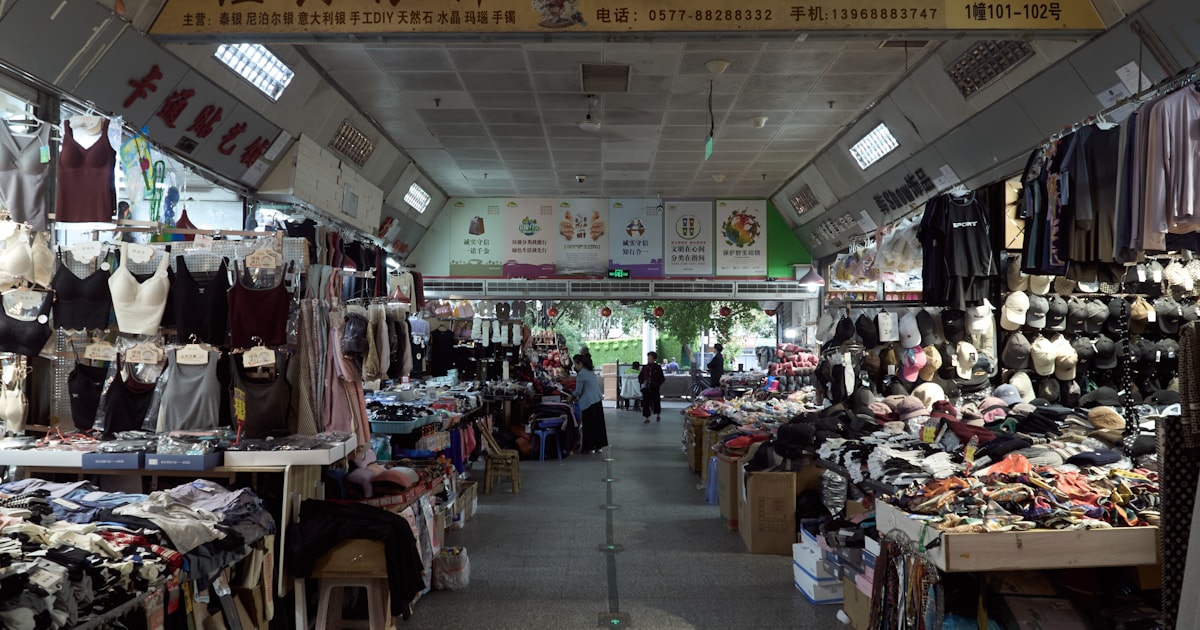
A Practical Guide to Sourcing from Guangzhou, China
Read more →
How Long Does Shipping from China to Bangladesh Take?
Read more →
Sea Freight vs Air Freight from China to Bangladesh: Which Should You Choose?
Read more →
Why Pre-Shipment Quality Inspection Saves You Money
Read more →
Should You Go to the Canton Fair? A Guide for Bangladeshi Importers
Read more →No guide matches that search yet. Ask us on WhatsApp and we will answer.

Tell us what you're shipping.
Product, quantity and delivery city are enough to start. We reply within 24 hours with a door-to-door quote.