

August 9, 2026
How Volumetric Weight Works for Air Freight from China
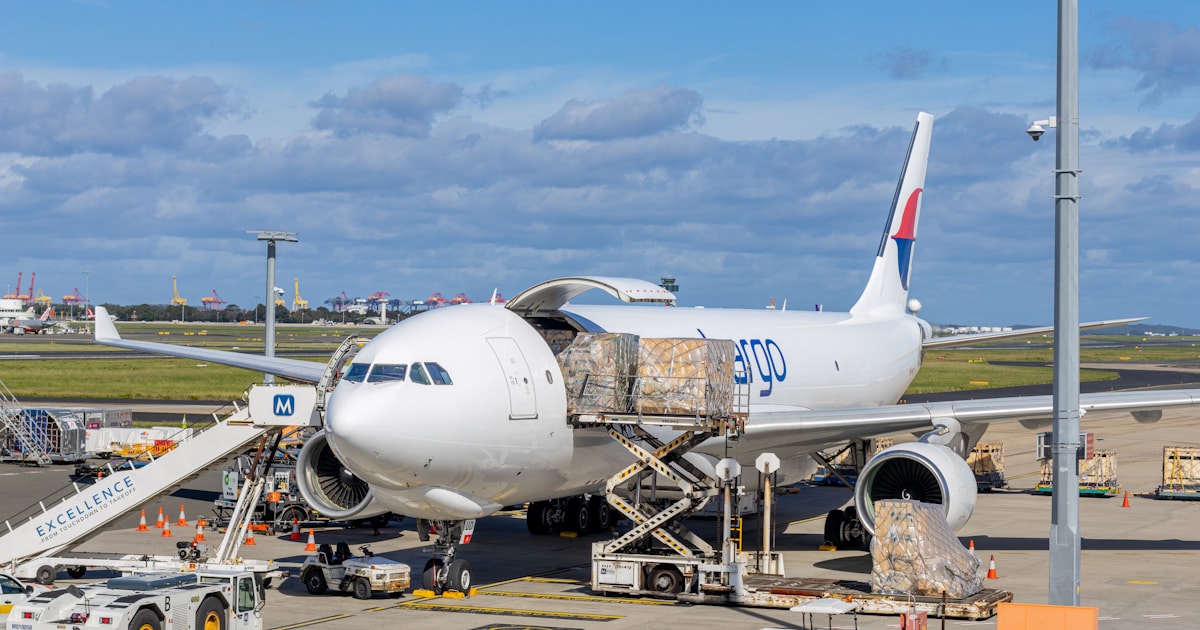
If you have ever been quoted a higher air freight charge than you expected based on your product's actual weight, volumetric weight is almost certainly why. Air freight is not priced purely by how heavy your cargo is. It is priced by whichever is greater: the actual weight, or a calculated "volumetric weight" based on the space your cargo takes up. Light, bulky items can end up costing far more to fly than their scale would suggest.
What volumetric weight actually means
Aircraft have limited cabin volume, not just a weight limit. A box of pillows and a box of steel fittings might weigh completely different amounts, but if they take up the same space in the aircraft hold, the pillows are arguably "more expensive" to carry, since they are wasting space that could otherwise be filled with heavier, more profitable cargo. Volumetric weight is the industry's way of pricing for that space, not just the scale reading.
The standard formula
For general air freight, the widely used formula is:
- Length x Width x Height (in centimeters), divided by 6000 = volumetric weight in kilograms
This 6000 divisor is the common industry standard for air freight, though it is worth knowing that international courier and express parcel services (the kind used for smaller e-commerce shipments) sometimes use a different divisor, commonly 5000, which produces a higher volumetric weight for the same box. Always confirm the exact divisor your freight forwarder or courier is using, since it directly affects your quote.
Chargeable weight: whichever number is higher
Once both numbers exist, you are billed on the chargeable weight, which is simply the higher of the two:
- Actual gross weight, from a physical scale
- Volumetric weight, from the dimension formula above
If your actual weight is higher, you pay for actual weight. If the volumetric weight comes out higher, that is what you pay for instead.
A worked example
Say you are shipping a carton measuring 60cm x 50cm x 40cm, with an actual weight of 12kg.
- Volume: 60 x 50 x 40 = 120,000 cubic centimeters
- Volumetric weight: 120,000 / 6000 = 20kg
Even though the carton only weighs 12kg on a scale, you would be charged as if it weighs 20kg, because the volumetric figure is higher. On a per-kilo air freight rate, that is a meaningfully larger bill than the actual weight alone would suggest.
Why this catches importers off guard
Products that are common in China-to-Bangladesh trade are frequently light-but-bulky: plastic housewares, foam-packed electronics, garments on hangers, inflatable or soft goods, and anything shipped in oversized protective packaging. First-time importers often estimate air freight cost using actual weight alone, then get a shipping invoice that looks much higher than expected. It is not a hidden fee. It is the standard, industry-wide way air cargo is priced, and any legitimate forwarder should explain it upfront in a quote.
Air freight vs sea freight: a different kind of size penalty
Sea freight has its own version of this idea, called CBM, which prices LCL sea shipments by cubic meters rather than kilograms per 6000cm3. The underlying logic is similar: bulky cargo costs more relative to its weight. If your product is especially light and bulky, it is worth comparing both modes properly rather than assuming air freight is simply "the fast, expensive option" and sea freight is "the slow, cheap option." Our guide to sea freight vs air freight from China to Bangladesh walks through how to weigh speed against cost for a specific shipment.
How to reduce your volumetric weight
- Use tighter, product-fitted packaging instead of oversized boxes with excess empty space
- Remove unnecessary void fill where the product does not need heavy protective padding
- Consolidate multiple small boxes into fewer, well-packed cartons where possible, since irregular small packages often waste more space proportionally
- Ask your supplier about flat-pack or collapsible packaging options for products where the box, not the product, is driving the volume
- Compare sea freight for genuinely bulky, non-urgent cargo, where CBM-based pricing may work out considerably cheaper than air
FAQ
Does volumetric weight apply to sea freight too?
Not in the same form. Sea freight, especially LCL, uses CBM (cubic meters) as its pricing unit rather than a weight-equivalent formula, but the underlying idea, that space costs money, is the same.
Will every forwarder use the same divisor?
No. The 6000 divisor is standard for general air freight, but express couriers commonly use 5000, and this can vary by carrier and service type. Always ask your forwarder which divisor applies to your specific quote before assuming a number.
Can I calculate this myself before asking for a quote?
Yes. If you know your carton dimensions in centimeters and your actual weight in kilograms, you can run both calculations yourself using the formula above to get a rough idea of your likely chargeable weight before you even request a quote.
If you are not sure whether air or sea freight makes more sense for a specific shipment, tell us your product, dimensions, and weight and we can quote both options so you can compare the real numbers side by side.
Ready to ship? Explore our sea freight, air freight, sourcing, and customs clearance services from China to Bangladesh.
Get a Sourcing & Shipping Quote ← All posts
Related Articles
Sea Freight vs Air Freight from China to Bangladesh: Which Should You Choose?
Read more →
What Is CBM and How to Calculate It for Sea Shipping
Read more →
5 Tips to Lower Your China-to-Bangladesh Shipping Costs
Read more →
What Is an Air Waybill and How It Differs from a Bill of Lading
Read more →
Shipping Batteries and Liquids by Air: What Changed in 2026
Read more →No guide matches that search yet. Ask us on WhatsApp and we will answer.

Tell us what you're shipping.
Product, quantity and delivery city are enough to start. We reply within 24 hours with a door-to-door quote.