

August 12, 2026
What Is an Air Waybill and How It Differs from a Bill of Lading
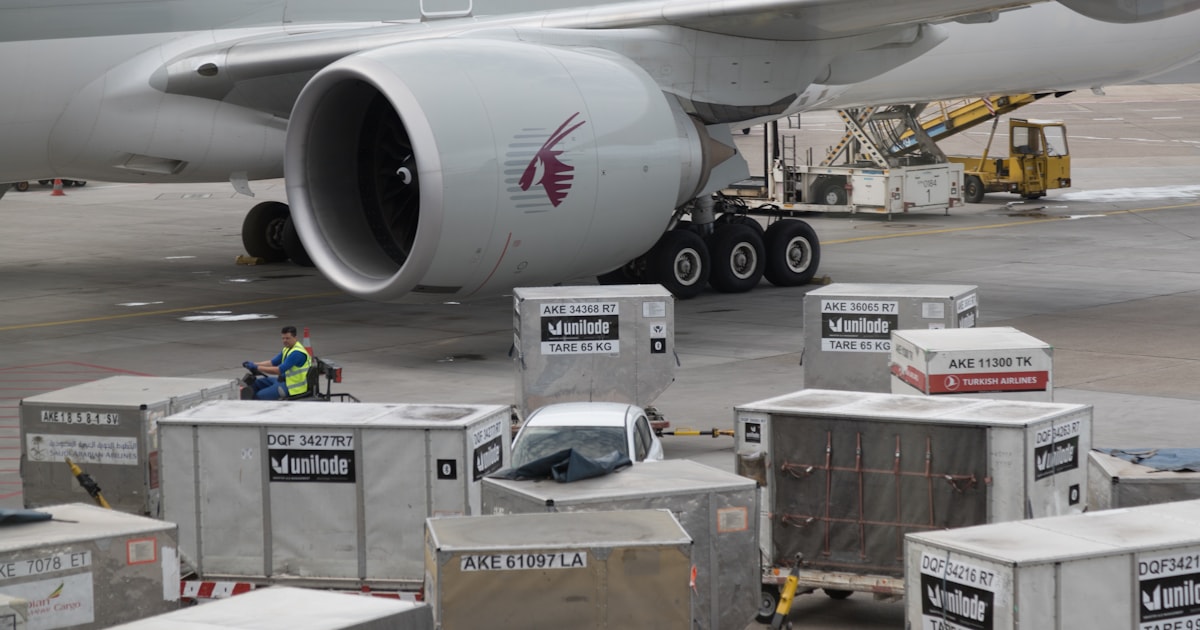
If you have shipped anything by air freight, an Air Waybill was involved, whether you noticed it or not. It looks similar in purpose to a Bill of Lading, both are shipping documents issued when cargo is handed to a carrier, but one critical difference changes how air cargo actually gets released at the other end.
What an Air Waybill actually is
An Air Waybill, often shortened to AWB, is the contract of carriage and receipt issued when a shipment is accepted for air transport. It confirms the carrier has received the goods, states the terms of carriage, and travels with the shipment as its primary paperwork. In that sense, it does the same basic job as a Bill of Lading does for sea freight.
The one critical difference: it is never a document of title
This is the part that catches people out if they assume air and sea documents work the same way. A Bill of Lading can be issued as a negotiable document of title, meaning whoever holds the original controls the cargo. An Air Waybill is never negotiable. It is always a straight consignment document, meaning the cargo is released to the named consignee, and only the named consignee, regardless of who is physically holding a copy of the paperwork. There is no equivalent to an original Bill of Lading changing hands to transfer control in air freight.
What that means in practice
Because an AWB cannot be used to transfer title, air freight shipments cannot use the same supplier-holds-the-original-as-leverage arrangement that some sea freight shipments use with a Bill of Lading. If a supplier wants payment security tied to control of the shipping document, air freight is not the mode that provides it. This is one of several practical differences worth weighing when comparing sea freight against air freight for a specific order, beyond just cost and speed.
Master AWB vs House AWB
If your shipment is consolidated with other cargo, which is common for smaller air shipments, you may encounter two AWBs rather than one:
- Master Air Waybill (MAWB) — issued by the airline to the freight forwarder or consolidator, covering the entire consolidated shipment as one unit
- House Air Waybill (HAWB) — issued by the forwarder to you, the actual shipper, covering just your specific portion of the consolidated cargo
This two-layer structure is normal for consolidated air freight and is roughly the air equivalent of how LCL sea shipments are consolidated under one ocean Bill of Lading while individual shippers get their own paperwork for their share.
What information appears on an Air Waybill
An AWB typically records the shipper and consignee details, the airport of departure and destination, a description of the goods, the weight (including both actual and volumetric weight where relevant), the number of pieces, and the agreed carriage charges. Because chargeable weight directly affects cost, this is also where the volumetric weight calculation for your shipment gets formally recorded.
Why cargo release works differently for air freight
Since the AWB is a straight consignment document rather than a document of title, releasing air cargo is generally more straightforward than releasing a sea shipment under an original Bill of Lading. There is no waiting for physical original documents to be couriered before pickup can happen, since the named consignee can generally take delivery once the shipment arrives and customs clearance is complete. This is one of the reasons air freight, beyond simply being faster in transit, often also has a faster and simpler release process at destination.
FAQ
Can an Air Waybill be used to secure payment the way an original Bill of Lading sometimes is?
No. Since an AWB cannot transfer title, it cannot be used as leverage in the same way. Payment security for air shipments needs to be arranged through other means, such as agreed payment terms with the supplier.
Do I need to do anything differently to receive cargo under a House AWB versus a Master AWB?
Not typically. As the named consignee on the House AWB, your forwarder handles matching it against the Master AWB and manages the release process on your behalf.
Does the Air Waybill show the same duty and tax information as customs documents?
No, the AWB is a carriage document, not a customs declaration. Duties and taxes are assessed separately based on your invoice, HS code, and declared value during clearance.
Shipping by air and want to understand exactly what will appear on your Air Waybill before you book? Ask us for a quote and we will walk you through the paperwork alongside the cost.
Ready to ship? Explore our sea freight, air freight, sourcing, and customs clearance services from China to Bangladesh.
Get a Sourcing & Shipping Quote ← All posts
Related Articles


No guide matches that search yet. Ask us on WhatsApp and we will answer.

Tell us what you're shipping.
Product, quantity and delivery city are enough to start. We reply within 24 hours with a door-to-door quote.