

September 22, 2026
What Goes on the Outside of Your Cartons
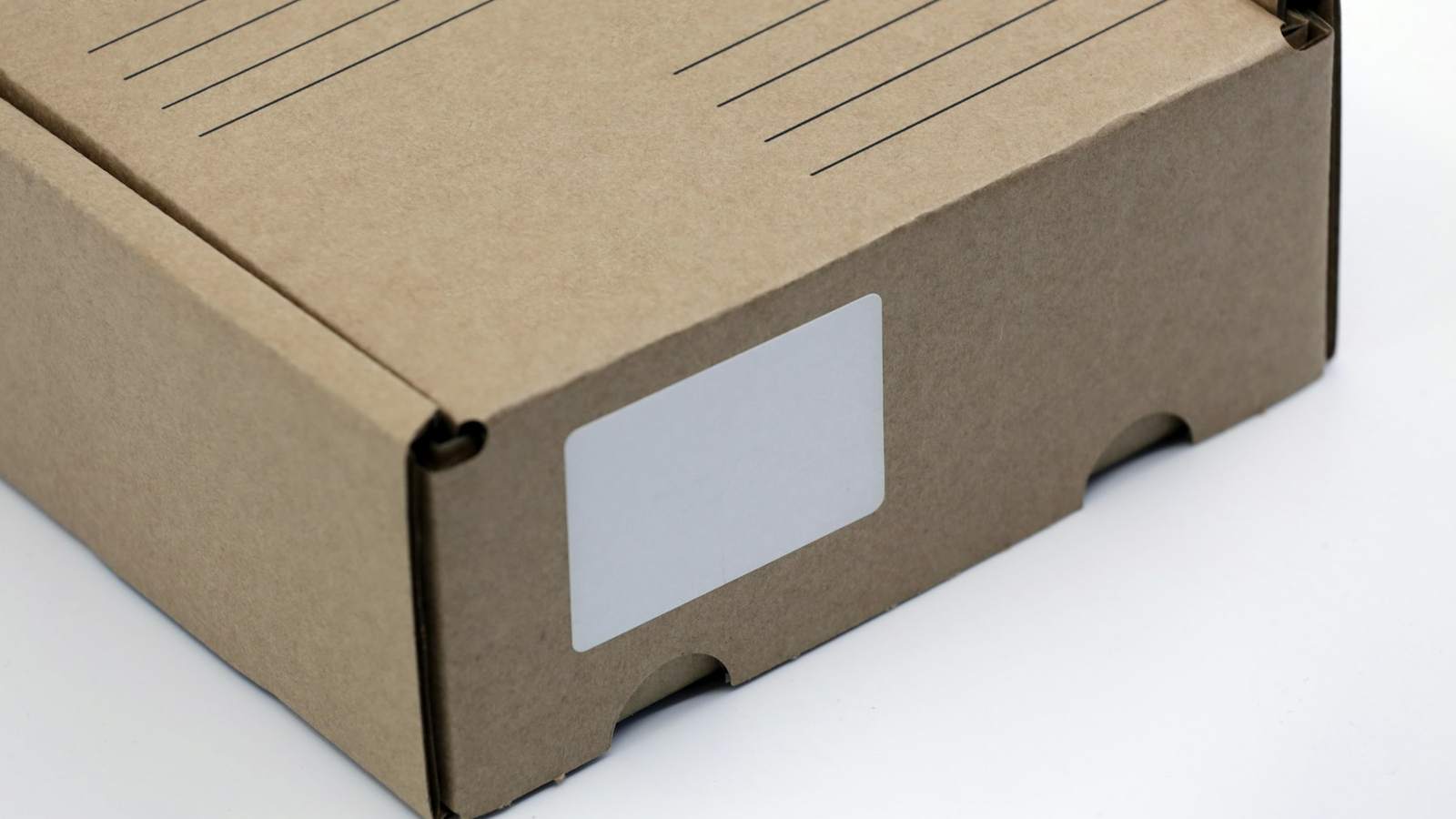
You have agreed the product, the price and the packing. Almost nobody spends any time on what is printed on the outside of the cartons, and then the cartons arrive with a factory code, a Chinese product name and nothing else.
That blank outside causes more practical trouble than importers expect. It is what the consolidator reads, what the customs officer compares against your paperwork, and in Bangladesh it is also subject to rules that most first-time importers have never been shown.
What a shipping mark is
A shipping mark is the block of information stencilled or printed on the outside of each carton. Conventionally it comes in two parts.
The main mark identifies whose cargo it is and where it is going: the consignee or a buyer code, the purchase order or contract number, the destination port, and the carton number in the form 1 of 40, 2 of 40 and so on.
The side mark carries the physical detail: net weight, gross weight, dimensions or measurement, and the country of origin.
Neither is decorative. Each line answers a question somebody will ask while your goods are in transit.
Why this matters most on LCL
If you book a full container, your cartons travel alone and a weak mark is survivable.
On LCL it is different. Your cartons are stacked in a container with several other importers' goods, handled at a consolidation warehouse in China and separated again at a warehouse in Bangladesh, by people who have never seen your order and cannot read your invoice.
The mark is the only thing that distinguishes your forty cartons from the identical-looking forty next to them. That is why an exclusive buyer code and your PO number on the main mark are worth insisting on for shared-container shipments. Cartons do go astray in deconsolidation, and unmarked cartons are the ones that stay astray.
Carton numbering matters for the same reason. If 38 of 40 cartons arrive, "carton 17 of 40 and carton 29 of 40 are missing" is a claim. "Two boxes are missing" is an argument.
The marks have to agree with your documents
This is where a marking problem turns into a clearance problem.
The marks on the cartons should match what your packing list and your commercial invoice say. If an officer opens a container during a physical examination and the carton in front of them does not correspond to the document in their hand, the consignment stops while the difference is explained.
The most common version of this is mundane: the supplier reuses last order's marking plate, so the cartons carry an old PO number, or the carton count on the boxes does not match the count on the packing list because someone split a carton at the last minute.
Handling symbols
Alongside the text, cartons carry the familiar pictograms: the broken glass for fragile, the two upward arrows for this way up, the umbrella for keep dry, the crossed-out box for do not stack.
These are standardised under ISO 780, which sets out the symbols used to convey handling instructions on transport packages, and they are meant to be stencilled directly onto the package or applied on a label. The point of a pictogram is that it works regardless of what language the handler reads.
Keep dry deserves particular attention on this route. It will not stop condensation forming inside a sealed container, which is a separate problem covered in our guide to container rain, but it does affect how your cartons are treated in open yards and during loading.
The Bangladesh rules nobody mentions
Here is the part that is specific to importing into Bangladesh, and it is not optional.
Under the Import Policy Order, country of origin must be mentioned clearly on the package and container of the goods in all cases of import, and a certificate of country of origin issued by the appropriate authority in the exporting country must be submitted with your import documents when the goods are released. The order provides that the country of origin requirement does not apply to coal, export-oriented garment industries and industrial raw materials.
There is a second requirement that surprises people. The order requires that the name, address and ETIN or BIN of the importer be inscribed or printed in indelible ink on at least two percent of the largest packets, covers, tinned packages, sack packs, wooden boxes or other packets containing the imported goods.
It lists exceptions, including goods imported uncovered and in bulk, consignments valued up to USD 5,000, imports in the government sector, approved foreign aid-based projects and free samples.
Read those two together and the practical consequence is clear. For a normal commercial consignment above that value, some of your cartons have to carry your own company details, in permanent ink, printed in China before the goods are packed. It cannot be fixed at Chattogram with a marker pen, and discovering it at clearance is an expensive way to learn it.
Import Policy Orders are reissued periodically and the detail can change between editions, so confirm the current wording and thresholds with your C&F agent before you send marking instructions to a supplier.
How to actually get this right
Marking is a supplier instruction, which means it belongs in the order documents rather than in a message sent while the goods are being packed.
- Send a marking template, not a description. A simple artwork file showing exactly what goes on the main mark and side mark removes the guesswork
- Put it in the purchase order and the proforma invoice stage, so it is agreed before production rather than negotiated afterwards
- Specify English, and specify permanent ink or printed labels rather than handwriting
- State the placement: typically on two opposite sides, and on the top for cartons that will be stacked
- Include the country of origin and your company details where the rules require them, and tell the supplier explicitly that this is a legal requirement at the destination rather than a preference
- Ask for photographs of the marked cartons before loading. A pre-shipment inspection can check marking as easily as it checks the goods, and this is the last cheap moment to fix an error
- Keep the marking file, so the next order is consistent and you can see immediately if something changed
The short version
The outside of the carton is the only part of your shipment that everyone in the chain actually reads. It costs nothing to specify and it is nearly impossible to correct once the container is sealed.
Ten minutes with your supplier before production, and a photograph before loading, prevents the two failures that actually happen: cartons that cannot be told apart in a shared container, and markings that do not satisfy the rules at the port where your goods are sitting.
Marking requirements are set by the Import Policy Order and can change between editions. Confirm the current requirements for your product with your C&F agent rather than relying on a general guide.
Ready to ship? Explore our sea freight, air freight, sourcing, and customs clearance services from China to Bangladesh.
Get a Sourcing & Shipping Quote ← All posts
Related Articles
What Your Packing List Needs to Include
Read more →
What Your Commercial Invoice Needs to Include
Read more →
What Happens During a Physical Customs Examination
Read more →
LCL vs FCL: Which Container Option Saves You Money?
Read more →
Container Rain: Why Goods Arrive Wet When Nothing Leaked
Read more →
Why Pre-Shipment Quality Inspection Saves You Money
Read more →
Before the LC: What Your Bank Needs to Open It
Read more →
Putting Your Own Brand on a Chinese Product
Read more →No guide matches that search yet. Ask us on WhatsApp and we will answer.

Tell us what you're shipping.
Product, quantity and delivery city are enough to start. We reply within 24 hours with a door-to-door quote.