

September 17, 2026
Who Owns the Mould? Settle It Before You Pay for Tooling
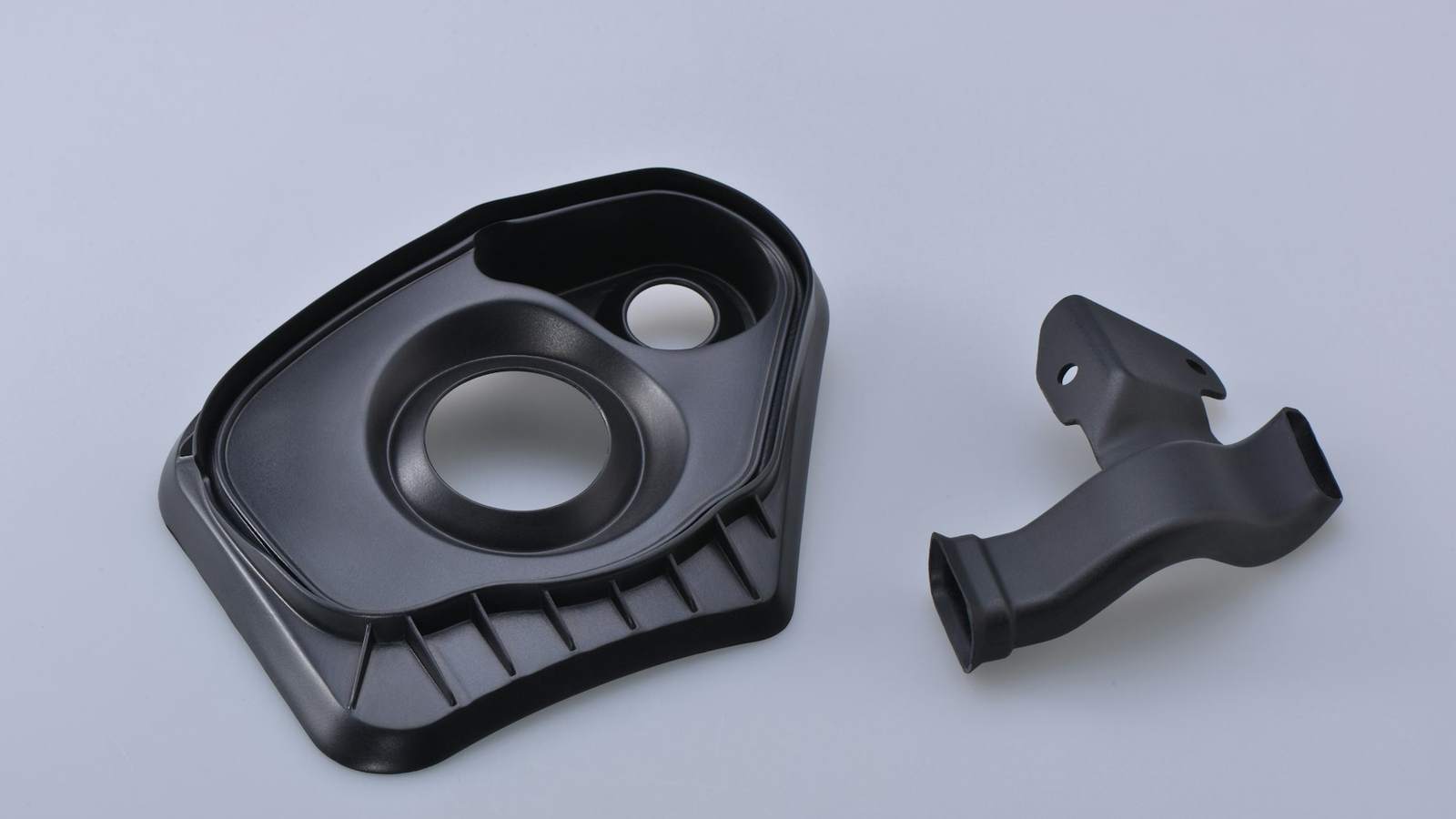
The quote for your custom product has a line on it you have not seen before. Tooling: a one-off charge, sometimes a few hundred dollars for a simple die, sometimes several thousand for an injection mould. Or the supplier waves it away and says the tooling is free.
Either way, you pay, the mould gets cut, and production starts. The question nobody asks at that point is the one that matters a year later: who owns it?
That question becomes urgent at exactly the wrong moment. The factory raises its price and you want to move production elsewhere. Or quality slips and you want a second source. You ask for your mould back, and discover the answer is not as obvious as it seemed when you paid the invoice.
What counts as tooling
Tooling is anything made specifically to produce your product rather than someone else's.
- Injection moulds for plastic parts, usually the most expensive item
- Dies for metal stamping, extrusion or die-casting
- Printing plates and cylinders for your packaging, labels and printed cartons
- Jigs and fixtures built to hold your part during assembly or testing
- Silicone or steel moulds for rubber and silicone goods
If your product is a standard catalogue item with your logo printed on it, your tooling exposure is small, usually just printing plates. If the shape itself is yours, the tooling is the most valuable thing in the relationship, and it is sitting on someone else's factory floor.
Paying for it is not the same as owning it
This is the part that surprises people, and it is worth stating plainly.
Dan Harris of Harris Sliwoski, who has spent decades writing manufacturing contracts for buyers importing from China, puts it directly: paying for tooling does not by itself prove ownership clearly enough. Legal ownership and physical possession are two different things, and the factory has the second one.
He describes a case that shows exactly how that plays out. A buyer received a demand for a 34% price increase. The reason the demand worked was that the factory held the buyer's moulds, designs and customer list. There was no practical way to say no.
That is what a tooling dispute actually looks like. Not a lawsuit, but a price increase you cannot refuse, arriving at the moment you are least able to switch.
The "free tooling" trap
When a supplier offers tooling at no charge, the cost has not disappeared. It has been built into your unit price and will be recovered over the production runs that follow.
That is a normal commercial arrangement and not dishonest in itself. The problem is what it does to ownership. If the tooling cost is being recovered through your unit price, the factory's position is often that the tooling does not become yours until some volume has been reached, and that volume is frequently never written down. Harris flags this specific arrangement as a trap precisely because the transfer point stays vague.
If you accept free tooling, get the terms in writing anyway: what volume discharges the cost, what happens if you stop ordering before then, and what you can buy the tooling out for.
What to put in writing before you pay
The moment of maximum leverage is before the tooling deposit leaves your account. Harris is explicit that you should not pay a tooling invoice before the tooling terms are agreed.
At minimum, settle these points in your purchase order or a separate tooling agreement:
- Who owns the tooling, stated plainly, and from what moment
- Where it is kept, and that it may only be used to fill your orders
- That the factory may not pledge it, transfer it, lend it, scrap it, or use it as leverage
- Your right to inspect it, and to have it returned on request within a stated number of days
- Identification details: a tooling serial or asset number, weight, and photographs, so the item is identifiable rather than merely described
- What happens if the factory subcontracts part of your production, since your tooling can end up somewhere you never approved
- Who pays for maintenance and repair, and who owns replacement tooling when the original wears out
Photographs and a serial number sound excessive until you try to identify one steel mould among hundreds in a factory that no longer wants to help you.
Protect the design before you send it
There is an earlier step that matters just as much, and it happens before any tooling exists.
To get quotes for a custom product, you have to send drawings, specifications or a sample to several factories. That disclosure is the risk. The standard protection for this is an NNN agreement, which covers three things: non-disclosure (they may not share your information), non-use (they may not use it to compete with you) and non-circumvention (they may not go around you to your customers).
Harris Sliwoski recommend a sequence rather than a single document: screen factories without revealing what makes your product distinctive, narrow to a shortlist, put NNN agreements in place with the finalists, and only then share the details that matter. A full manufacturing agreement, covering quality, delivery, subcontracting, IP and tooling, comes after you have chosen the factory and before any deposit is paid.
They also make a practical point about drafting that is easy to get wrong: for a mainland Chinese supplier, an agreement is far more useful in Chinese, under Chinese law, enforceable in a Chinese court where the factory and its assets actually are. An English-language contract pointing at a court on the other side of the world is generally not the deterrent buyers imagine it to be.
Being realistic about your size
Here is the part that general advice usually skips.
If your order is worth a few lakh taka, litigating in a Chinese court over a mould is not a realistic plan. The cost of the fight exceeds the value of the asset. That does not make the paperwork pointless, because a clear written term often prevents the dispute rather than resolving it, but it does mean your real protection is commercial rather than legal.
What actually protects a small importer:
- Keep the design files yourself. If a factory produced your drawings or CAD from scratch, you are in a much weaker position than if you own the source files and can hand them to anyone
- Know the re-cut cost. For many simple products, cutting a new mould elsewhere costs less than a long fight. If you know that number, a price demand loses its force
- Do not concentrate everything in one place. A second supplier who has quoted your product, even if they have never produced it, is leverage
- Stage your payments. The structure in our guide to paying suppliers safely applies to tooling too: a deposit, then a balance against an approved first-off sample
- Approve a first article from the tooling, and keep it sealed as your reference, exactly as our guide to ordering samples describes
- See the tooling. If you are already commissioning a factory inspection, ask the inspector to photograph your mould and its markings while they are there
Where this connects to everything else
Tooling is the reason a supplier relationship can turn one-sided over time. A factory that holds your mould knows you cannot easily leave, and a supplier who knows you cannot leave has less reason to hold a price or a standard. That is the same dynamic behind quality fade on repeat orders, approached from a different direction.
It also matters if you are building your own brand rather than reselling someone else's. Owning the tooling, the design and the mark is what makes it your product, and the difference between that and putting your logo on a copy is the subject of our guide to branded goods and customs risk.
If a factory is holding your tooling now
Deal with it commercially before you treat it as a legal problem.
- Ask, in writing, for the tooling to be released, and keep the reply. A clear refusal is more useful to you later than a phone call
- Price the alternative. Get a quote to re-cut the tooling elsewhere before you negotiate, so you know what walking away costs
- Separate the arguments. If the factory is withholding tooling over an unpaid balance, that is a different dispute from one where they simply do not want to lose the business
- Do not send more money for new tooling to the same factory while the old tooling is in dispute
Then, whichever way it resolves, write the terms down properly for the next one. Almost every tooling problem is cheap to prevent and expensive to fix, and the cheap moment is the day before the deposit goes out.
Contract requirements and what is enforceable vary with the facts, the amounts involved and the countries concerned. For a significant tooling investment, take advice from a lawyer who handles China manufacturing contracts rather than relying on a general guide, including this one.
Ready to ship? Explore our sea freight, air freight, sourcing, and customs clearance services from China to Bangladesh.
Get a Sourcing & Shipping Quote ← All posts
Related Articles

How to Pay Chinese Suppliers Safely from Bangladesh
Read more →
How to Order Samples from a Chinese Supplier (and What to Check)
Read more →
How a China Factory Inspection Works, Step by Step
Read more →
Quality Fade: Why Your Fourth Order Is Worse Than Your First
Read more →
Branded Goods, Copies and Customs: The Import Risk Nobody Prices In
Read more →
Ramadan 2027 and Chinese New Year Fall in the Same Week
Read more →
Putting Your Own Brand on a Chinese Product
Read more →No guide matches that search yet. Ask us on WhatsApp and we will answer.

Tell us what you're shipping.
Product, quantity and delivery city are enough to start. We reply within 24 hours with a door-to-door quote.